
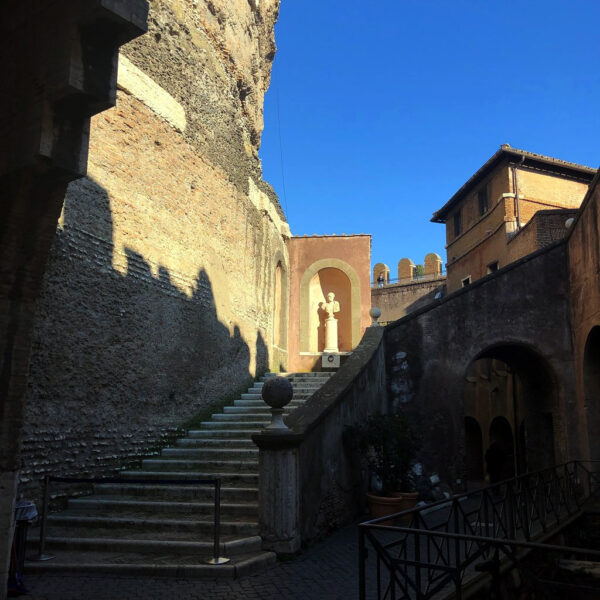
The Hall of Justice: Where Verdicts Were Decided
The Hall of Justice inside Castel Sant’Angelo was a solemn tribunal room where judges and officials oversaw trials and pronounced sentences — often harsh and final. This chamber reflects how justice in papal Rome was concentrated within fortified walls.
Notable Trials and Sentences
Several significant figures were tried or condemned here, including:
- Humanists Pomponio Leto and Platina for conspiracy.
- Beatrice Cenci, whose tragic story inspired poets and writers from Shelley to Stendhal.
- Philosopher Giordano Bruno, condemned for heresy.
Execution Courtyard: Death Sentences Carried Out
Behind the fortress walls, the Execution Courtyard was the site of many secret and non‑public executions. Prisoners convicted of treason, espionage, or other grave crimes were executed by firing squad, and bodies were often discarded into the Tiber River.
The nearby Bell of Mercy, near the statue of Archangel Michael atop the castle, tolled to announce capital sentences.
Famous Individuals Connected to Castel Sant’Angelo
👤 Beatrice Cenci
Beatrice Cenci’s tragic execution at Piazza di Ponte drew crowds not for morbid spectacle but out of sympathy for her plight — she had suffered abuse at the hands of her father, which the Romans understood deeply.
👤 Giordano Bruno
The philosopher Giordano Bruno, later executed outside the castle precincts, is closely associated with the fortress’s grim history of justice and punishment.
Museum of Criminology: Objects, Torture & Historic Relics
The Museum of Criminology near Castel Sant’Angelo exhibits artifacts linked to the justice system of Renaissance and papal Rome. Visitors can see instruments of punishment, execution swords, official uniforms, and more — all evocative of the era’s justice practices.
The Treasury & Prison Transformation
Originally a secure treasury room for the papal state, this space later became a prison in the 19th century, with graffiti and inscriptions that bear witness to the suffering endured by inmates.
Borgo Pio: Life After Castel Sant’Angelo
A vibrant historic neighborhood near Castel Sant’Angelo, Borgo Pio invites visitors to stroll its cobbled streets, enjoy Roman cuisine, and imagine everyday life outside the fortress’s shadowed past.
Why were executions held at Castel Sant’Angelo ?
The castle served as the main papal fortress and prison. Public executions on the bridge or the nearby square served as a powerful deterrent and a display of papal authority.
Can you visit the prison cells in Castel Sant’Angelo ?
Yes, during certain tours and times, the historic prisons (Prigioni Storiche) are accessible, showing the stark contrast between the papal luxury and the prisoners’ suffering.
Who was the most famous prisoner at Castel Sant’Angelo ?
TAside from Beatrice Cenci, the sculptor Benvenuto Cellini and the occultist Count Cagliostro are among the most famous figures ever held within these walls.
Start Planning Your Private Vatican Experience Today
Discover Rome like never before with private tours led by local experts. Perfect for first-timers and repeat travelers alike.
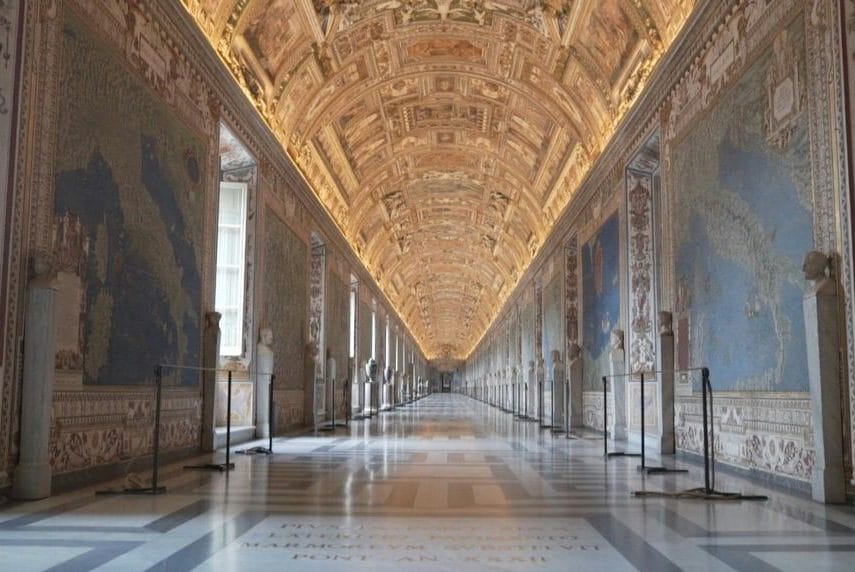
Vatican Museums and Sistine Chapel Tour
- What’s Included: Skip-the-line access, expert guide, Vatican Museums and Sistine Chapel.
- Duration: 3 hours
Explore the Vatican Museums and the Sistine Chapel with a 100% private guided tour, created exclusively for you and your group. Skip long lines, avoid crowded group tours, and enjoy one of the world’s most extraordinary art collections with a licensed expert guide.