
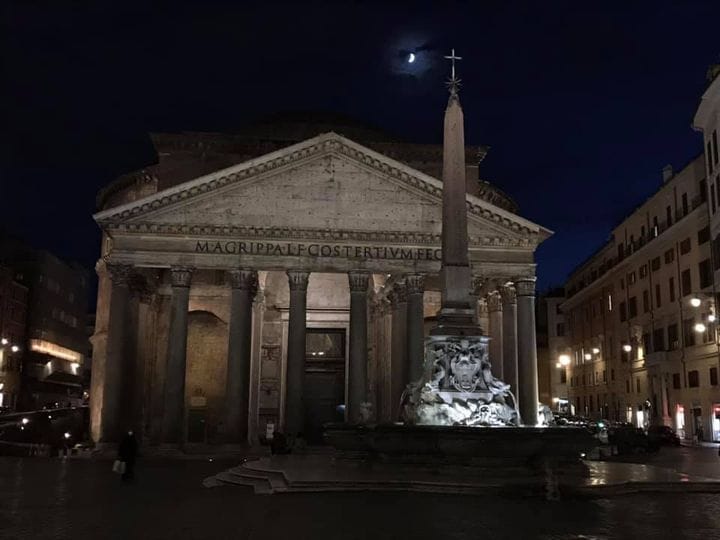
The Pantheon in Rome was once adorned with substantial bronze elements, including the roof truss and ornamental fittings that reflected the grandeur of Roman architecture.
Pope Urban VIII’s Controversial Decision (1625)
In August 1625, Pope Urban VIII Barberini ordered the removal and melting of the Pantheon’s bronze roof truss and decorative bronze components with a controversial aim.
Cannons for Castel Sant’Angelo or Art for St. Peter’s?
While the papal announcement suggested the bronze would be used for the grand Bernini Baldachin in St. Peter’s Basilica, historical records show most of the bronze was cast into cannons for Castel Sant’Angelo.
The Roman Backlash
Romans — fiercely proud of their imperial heritage — were outraged. To calm public criticism, papal communications falsely emphasized artistic reuse, but archival records tell a different story.
The Famous Roman Saying
From this incident emerged the iconic Roman proverb:
“Quod non fecerunt barbari, fecerunt Barberini” – What the barbarians did not do, the Barberini did.
Why This Matters to Today’s Visitors
Understanding this episode enriches any visit to the Pantheon, turning the monument into a symbol of cultural identity, historical memory, and contested heritage.
Conclusion — The Bronze That Rome Lost
Although the bronze is gone, this episode remains one of the most debated episodes in Rome’s layered past.
Did Bernini really use the Pantheon’s bronze for the Baldachin ?
Yes, but only a fraction. While the Vatican claimed the bronze was for St. Peter’s, most of it was used to manufacture cannons for Castel Sant’Angelo.
What happened to the bronze cannons of Urban VIII ?
Most were melted down again during the Napoleonic wars or subsequent conflicts. Today, the “Lost Bronze” survives mainly in the art of the Vatican.
Is the Pantheon’s dome made of bronze ?
No, the dome is made of unreinforced concrete. However, the exterior was once covered in gilded bronze tiles, which were stripped centuries earlier by a Byzantine Emperor (Constans II) in 663 AD.
Start Planning Your Private Rome Experience Today
Discover Rome like never before with private tours led by local experts. Perfect for first-timers and repeat travelers alike.
introduction to rome: Pantheon, trevi fountain and much more
- What’s Included: Expert guide, walking tour of Pantheon, Piazza Navona, and Campo de’ Fiori.
- Duration: 2 hours
Experience the charm of Rome’s historic center with our Pantheon, Piazza Navona, and Campo de’ Fiori Walking Tour. This leisurely stroll through some of Rome’s most iconic squares and landmarks includes a visit to the stunning Pantheon, one of the best-preserved monuments of Ancient Rome. You will also explore Piazza Navona, a masterpiece of Baroque architecture, and Campo de’ Fiori, one of Rome’s most famous open-air markets.