
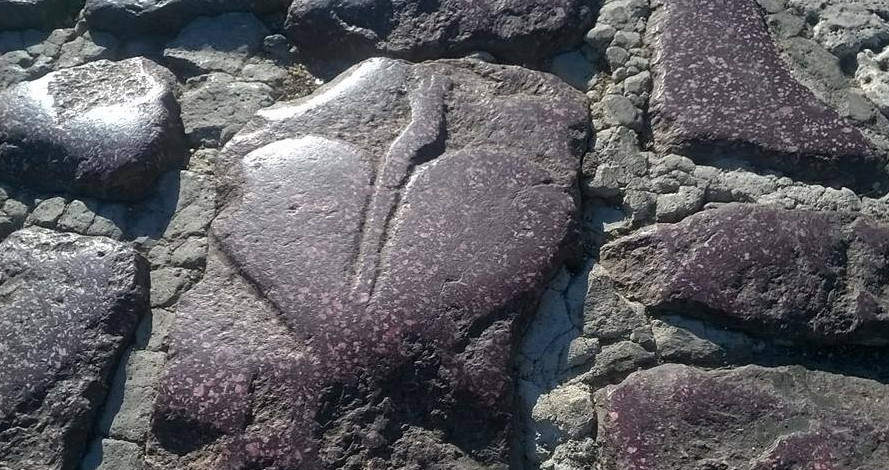
In the majestic expanse of St. Peter’s Square, where millions of cobblestones pave the ground, an unusual stone quietly draws attention: the Heart of Nero. This tiny porphyry stone carved like a heart hides amidst the Rosa dei Venti — the compass rose surrounding the Vatican obelisk — inviting visitors to discover a secret story beneath their feet.
What Is the Heart of Nero?
Unlike surrounding cobblestones, this small red porphyry block is marked with a heart shape, making it one of the most intriguing curiosities in Vatican City. Although it is difficult to spot among the roughly two million stones of the square, it has captured the imagination of locals and travelers alike.
Where to Find the Heart of Nero
The Heart of Nero can be found in the southwestern quadrant of the Rosa dei Venti — specifically near the Libeccio wind marker — on the side of the square facing the basilica. Many guidebooks and travel blogs highlight its location as a fun and lesser-known attraction during your Vatican visit.
Legends and Folklore Around the Stone
Artistic Love Stories
A popular legend claims that Renaissance genius Michelangelo carved the heart as a tribute to a doomed romance. Another version attributes the carving to Gian Lorenzo Bernini, perhaps symbolizing an affectionate but unfulfilled love.
Romantic and Historical Myths
Other tales suggest it was created by a grieving woman in memory of her unjustly condemned husband, or even by a soldier present during Giuseppe Garibaldi’s historic 1849 address in Rome.
Historical and Practical Interpretation
Despite its poetic allure, most historians believe the Heart of Nero is not intentionally symbolic. It is more likely a fragment of ornamental stone that was integrated into the pavement during the 19th century when the square’s grand sundial was established under the direction of astronomer Filippo Luigi Gigli.
At this point, do you want to know my hypothesis ?
Perhaps it isn’t a heart at all… but an ivy leaf! More precisely, it may be a fragment of an ancient Roman porphyry basin, later “converted” into a cobblestone for the square.

What is certain is that since 1817, the so-called Heart of Nero has been an infinitesimal part of one of the largest sundials in the world. This dates back to when the astronomer and naturalist Filippo Luigi Gilij transformed St. Peter’s Square into a solar clock, using the Vatican obelisk as its gnomon.
Traveler Tips
- Look for the heart early in the morning or late afternoon when shadows and crowds are minimal.
- The best viewpoint is along the line extending from the Vatican obelisk toward the basilica.
- Pair your search with a guided Vatican tour to enhance your experience.
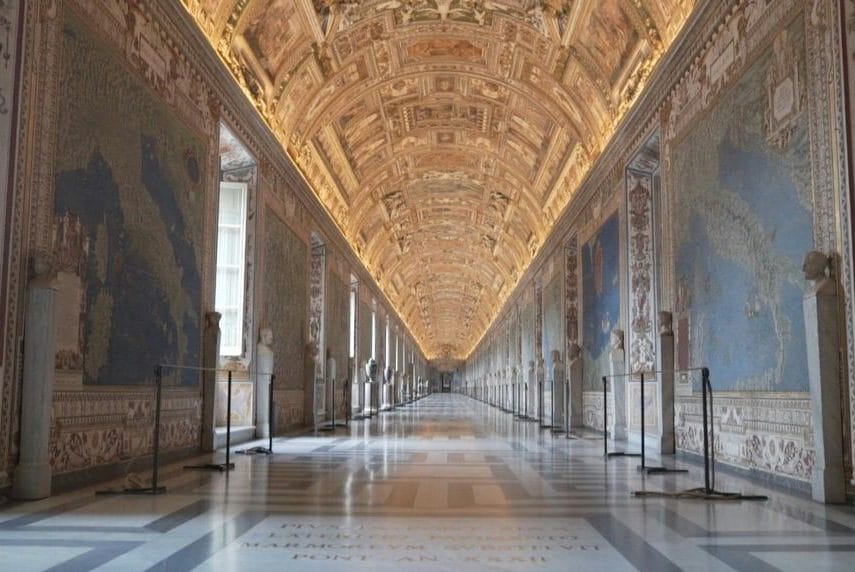
Vatican Museums and Sistine Chapel Tour
- What’s Included: Skip-the-line access, expert guide, Vatican Museums and Sistine Chapel.
- Duration: 3 hours
Explore the Vatican Museums and the Sistine Chapel with a 100% private guided tour, created exclusively for you and your group. Skip long lines, avoid crowded group tours, and enjoy one of the world’s most extraordinary art collections with a licensed expert guide.